










CountryLanguage

Dynka

Dynka

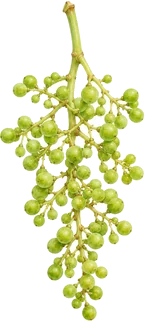
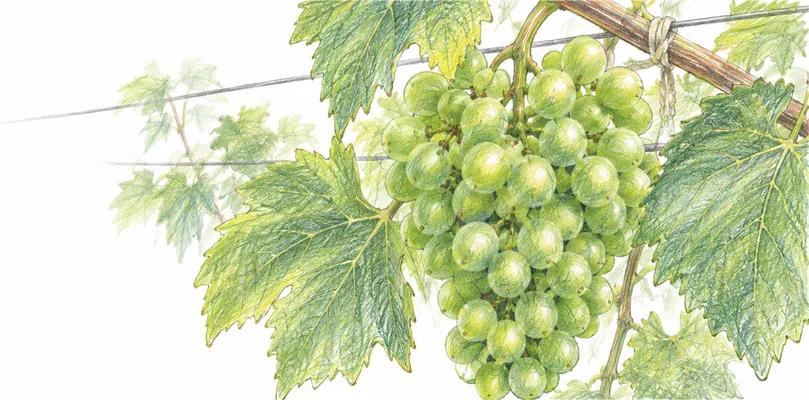
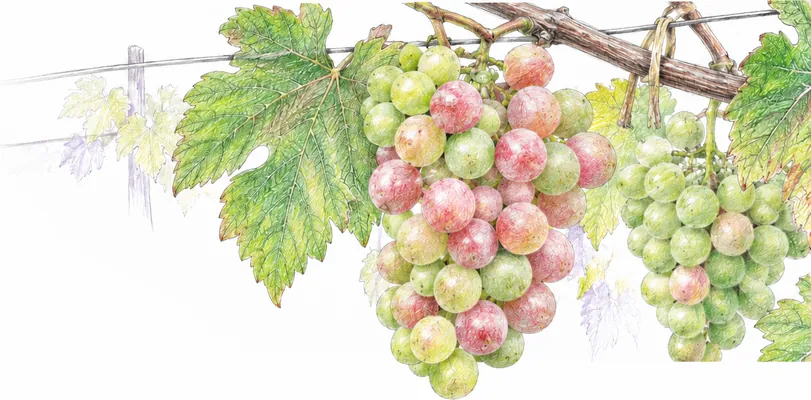
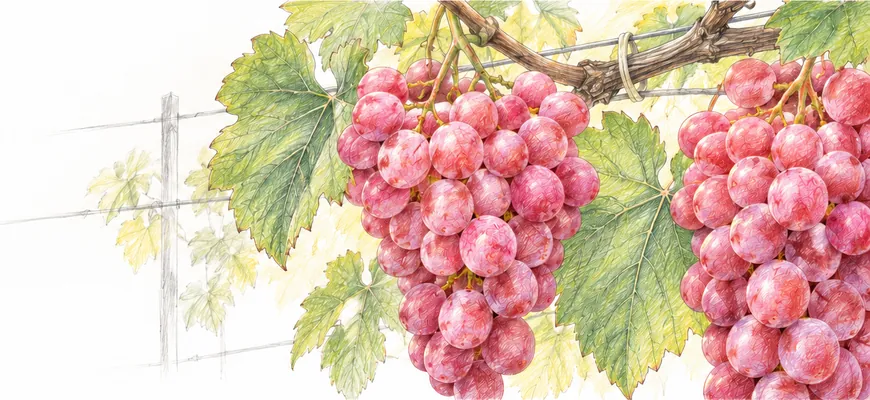
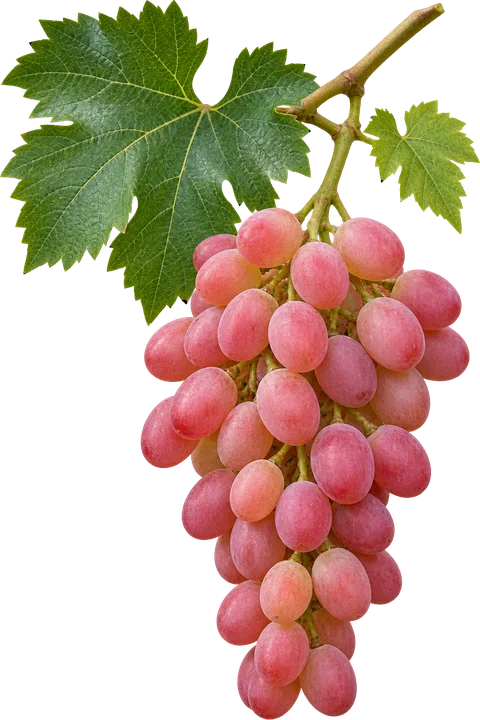
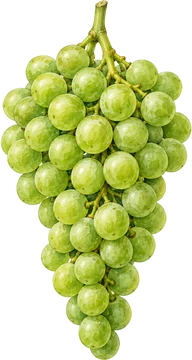
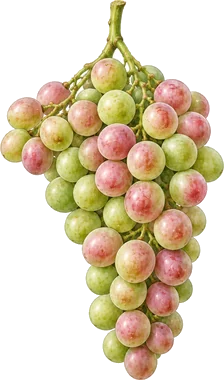
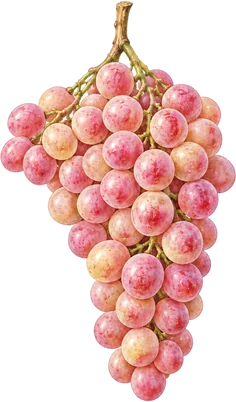
A pink table grape with ribbed berries. Growers in Belarus value its fruity flavour and hint of Muscat. Bunch compactness varies from season to season.

Dynka. A bunch of large, pink-red, longitudinally ribbed berries. AI illustration based on photos and the variety description
  • Ripening timeVery earlyAugust and September in Belarus
  • Berry10–12 gpink-red and ribbed, as described in the variety profile
  • Frost hardiness−19…⁠−22 °Creference estimate. Growers in Belarus cover the vines for winter
  • Sugar14–⁠18.6 Brixindividual readings in Belarus
  • 180first-hand observations
  • 20amateur growers
  • 11professionals
  • 6seasons

Dynka’s season in Belarus

Click a stage to see what happens on the vine and what growers saw.

Scroll the strip to see the whole season

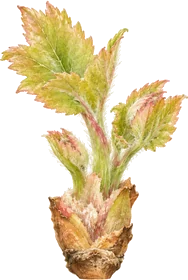
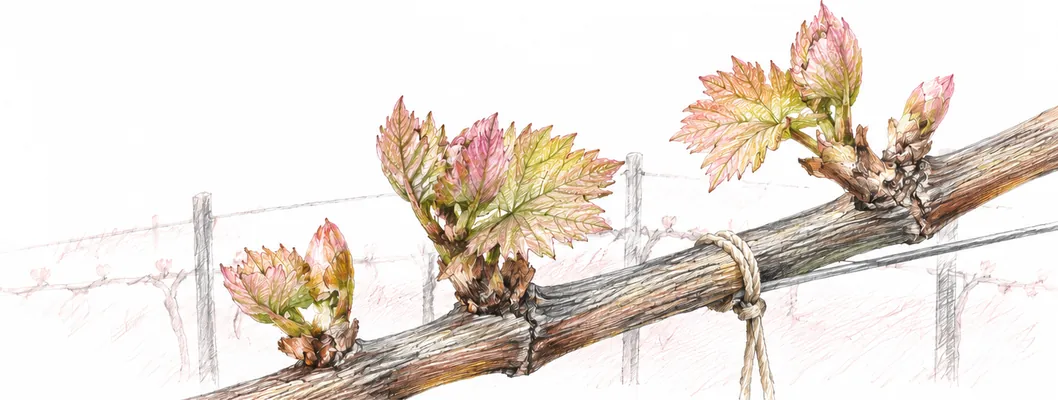
Bud break

April - May

When Dynka’s buds begin to open

Observations by professionals and amateurs
Professionals 1 observation

  1. Grodno Region, Grodnosteady warmth above +10 °C from 19 Mayfrosts of about −4 °C, the last on 9 MayBy 1 May 2025 in Grodno, Dynka had already begun to grow: two shoots were already growing, one noticeably stronger than the other, and a third was breaking through.

Amateurs 0 observations

2

Weather, diseases and pests

Professionals 3 observations

  1. Minsk Region, Smolevichi DistrictIn a greenhouseIn May 2025 in the Smolevichi region, Dynka in a film tunnel withstood spring frosts well. The bush stands deep in the tunnel, and the buds of the neighboring variety are a little frozen.
  2. Grodno Region, Grodnosteady warmth above +10 °C from 19 Mayfrosts of about −4 °C, the last on 9 MayDynka endured the spring frosts 2025 in Grodno well: by the beginning of May the shoots on the bush were growing, the author did not note any damage after the cold weather.
  3. Minsk Region, SoligorskIn the spring of 2023, Dynka in Soligorsk suffered from frost. Then the bush threw out clusters on the side shoots, they were left, and by mid-August they were hanging on the bush.

Amateurs 1 observation

  1. Location not specifiedIn the spring of 2025 the grower's Dynka bush froze, and the first bunches that were expected that season did not come out.
3

Work on the vine

No observations yet.

Weather in the observation lines is from AgERA5 data for the region: frosts, sum of active temperatures.

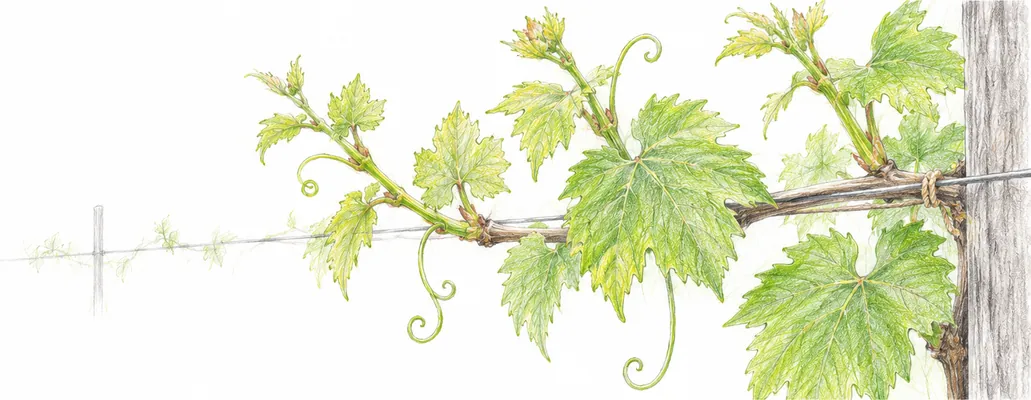
Shoot growth

May - July

How Dynka’s shoots grow

Observations by professionals and amateurs

Professionals 17 observations

  1. Grodno Region, GrodnoSAT since 1 April — 1259 °C, as usualmonthly precipitation — 76 mm, 20% less than usualIn July 2026 in Grodno, one of the Dynka bushes lagged behind in development from another bush in the same area. In the less sunny row, the grower expected smaller berries.
  2. Minsk RegionSAT since 1 April — 1007 °C, the season is 4 days behind usualmonthly precipitation — 80 mm, about usualIn 2026, very vigorous Dynka produced few bunches on 6 linear meters - mostly one per shoot, here and there two; Later it turned out that part of the bunches was hidden under the leaves.
  3. Grodno Region, GrodnoSAT since 1 April — 755 °C, as usualmonthly precipitation — 79 mm, about usualIn 2026 the Dynka bush, planted in 2024, grew weakly: 23 June did not reach the second wire, by 1 July it was halfway to the third, and by mid-July it had only outgrown it; the first 3–4 clusters appeared.
  4. Grodno Region, GrodnoIn 2025 the three-year-old Dynka bush was vigorous and produced two clusters per shoot. A two-year-old bush in partial shade also produced a lot of first bunches, and they were all left.
  5. Grodno Region, GrodnoDynka, planted in June 2024, grew well in the second season: by August 2025 one shoot outgrew the fourth wire, the second reached the fifth, later the shoots reached the top and were minted.
  6. Grodno Region, LidaSAT since 1 April — 937 °C, as usualmonthly precipitation — 84 mm, about usualIn early July 2025, the Dynka bush is growing rampantly; the grower did not thin the crop and left all the small bunches on the bush.
  7. Grodno Region, LidaIn a greenhouseIn early October 2024, in Lida, in one greenhouse Dynka had a second crop with small berries. In another greenhouse, the same grower had no such crop.
  8. Grodno Region, GrodnoSAT since 1 April — 1000 °C, the season is 12 days ahead of usualmonthly precipitation — 85 mm, 1.4 times the usualIn June 2024, the Dynka bush is vigorous: the shoots have already outgrown the top wire of a trellis 2.5 m high, and the grower believes the cultivar has shown its best side.
  9. Minsk RegionDynka at the grower is very vigorous: in June 2024, in its fourth year, a bush with 25 shoots had almost reached the top wire, and in 2026 the growth is large and the cane thick.
  10. Grodno Region, GrodnoSAT since 1 April — 775 °C, the season is 12 days ahead of usualmonthly precipitation — 45 mm, 40% less than usual; rain on 9 days of 14two weeks 2 °C warmer than usualA Dynka sapling planted in May 2024 and then transplanted to another place was still very small by 9 June.
  11. Minsk Region, Ostroshitsky GorodokIn a greenhouseIn the greenhouse on 20 April 2024, with short pruning to spurs Dynka has fewer shoots than neighboring forms, and no inflorescences are visible on them.
  12. Grodno Region, LidaIn a greenhouseIn 2023, in the large greenhouse in the sun the Dynka bush is powerful: thick canes longer than 3 m continued to grow after topping, each with one bunch, in places two. In the shaded greenhouse, where there is about 3 hours of sun, the bush is weaker.
  13. Vitebsk Region, NovopolotskIn 2023, the Dynka bush first grew and then stopped and looks unhealthy; whatever was tried, including a drench for root rots, has not helped yet. Another bush of this cultivar was lost.
  14. Minsk RegionTwo very weak Dynka saplings were planted in one planting hole; one died. The surviving bush in its third year, in 2023, produced magnificent growth and its first bunch.
  15. Grodno Region, LidaIn a greenhouseIn the greenhouse in July 2023, Dynka grows weakly and the shoots are thin; one or two small first bunches were left on the bush.
  16. Grodno Region, GrodnoIn the first season the Dynka bush developed weakly: only a shoot about 30 cm survived the winter, and it did not set a crop. In the second year, in 2022, the first small bunches appeared.
  17. Vitebsk Region, NovopolotskThe Dynka bush planted in 2020 had developed excellently by August 2021: the vine had grown more than two meters, and a good crop is already hanging on the bush.

Amateurs 6 observations

  1. Location not specifiedThe grower’s Dynka is very vigorous, so he keeps all the lateral shoots to give the vine some crop to carry.
  2. Location not specifiedDynka grafted in April 2024 onto a one-year-old vine from a bucket and planted in the ground in October gave magnificent growth and two bunches the following year.
  3. Location not specifiedA Dynka cutting received as a gift and rooted in 2024 grew well in 2025 and had already produced its first bunch, still small.
  4. Location not specifiedA Dynka sapling planted in spring 2024 had by autumn produced a shoot longer than 3 m and 8–9 mm thick; by mid-September the cane had already turned dark brown.
  5. Location not specifiedIn open ground last season Dynka produced its first crop — only a couple of bunches — while the neighboring Zorenka loaded up with bunches.
  6. Location not specifiedAt the grower, Dynka grows well by a wall on the southeast side. Sun reaches this plot only until two in the afternoon.
2

Weather, diseases and pests

Professionals 1 observation

  1. Minsk RegionSAT since 1 April — 569 °C, as usualmonthly precipitation — 156 mm, 2.6 times the usual; rain on 10 days of 1415% less sun than usualIn early June 2025, the Dynka vine is large, but the lower leaves are unsightly — the grower links this to cold weather and considers it not serious.

Amateurs 0 observations

3

Work on the vine

Professionals 2 observations

  1. Gomel Region, KalinkovichiIn a hotbedThe Dynka seedling planted in spring 2025 grew poorly in its first year. In spring 2026, a mini greenhouse was placed over it, and by mid-June the vine in the greenhouse had started growing well.
  2. Minsk RegionOn a very vigorous Dynka, lateral shoots with small clusters were not removed in 2024 and 2025 in order to load the vine: it carried the crop well, and the cane ripened normally.

Amateurs 0 observations

Weather in the observation lines is from AgERA5 data for the region: sum of active temperatures, precipitation.

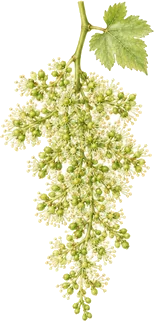
Flowering

late May — July

How Dynka flowers and sets fruit

Observations by professionals and amateurs

When growers observed Dynka in flower

4 observations with an exact day · 2024–2026

Professionals4 observationsAmateurs0 observations

Scroll the dates ↔

Distribution of observed flowering dates4 observations. Each bar is the number of records over two days. Height and colour intensity grow with the number of records; an empty space means no records.MayJuneJuly20222426283013579111315171921232527291357911131517ProfessionalsAmateurs

Professionals 10 observations

  1. Grodno Region, GrodnoSAT since 1 April — 1195 °C, as usualmonthly precipitation — 68 mm, 20% less than usual; rain on 10 days of 14On 16 July 2026, Dynka from the 2024 planting in Grodno had not yet finished flowering. These are its first bunches, about four of them. The vine is developing weakly.
  2. Minsk Region, Minsk DistrictSAT since 1 April — 914 °C, as usualmonthly precipitation — 86 mm, 1.3 times the usualtwo weeks 4 °C warmer than usual; 15% more sun than usualDynka with a female flower is growing as a grafted plant in open ground in Minsk District. It pollinated well in its very first year, without problems. In early July 2026, the berries also set well.
  3. Gomel Region, KalinkovichiIn a greenhouseIn Kalinovichi, Dynka under a small greenhouse started growing well. By 18 June 2026, it looked as if something had already set on it.
  4. Vitebsk Region, MezhnoIn a greenhouseIn the greenhouse in Mezhno, Dynka planted the previous year pollinated worse in 2025 than would have been desired. According to the grower, the variety was capricious this season.
  5. Minsk Region, SoligorskIn 2025, Dynka in Soligorsk for the most part pollinated very well. Some bunches were flawless, here and there shot berries occurred, and one bunch was half affected by millerandage.
  6. Minsk RegionSAT since 1 April — 1086 °C, as usualmonthly precipitation — 91 mm, about usualIn summer 2025, in Minsk Region, Dynka's flowers remained under caps for a long time. By 10 July, something had nevertheless set beneath them. The author did not rule out millerandage.
  7. Minsk Region, Smolevichi DistrictSAT since 1 April — 1025 °C, as usualmonthly precipitation — 91 mm, about usualIn 2025, Dynka in Smolevichi District let us down: the inflorescences were not bad, but they shed very heavily. By 7 July 2025, it was only just beginning to flower.
  8. Grodno Region, LidaSAT since 1 April — 937 °C, as usualmonthly precipitation — 84 mm, about usualOn 1 July 2025, Dynka was flowering at a grower's in Lida. According to him, the inflorescences did not shed, and flowering proceeded normally and well.
  9. Minsk RegionSAT since 1 April — 1035 °C, the season is 9 days ahead of usualmonthly precipitation — 83 mm, 1.4 times the usualBy 26 June 2024, Dynka at a grower's in Minsk Region had almost finished flowering. The nearby Darvik was still finishing flowering at that time.
  10. Grodno Region, LidaIn a greenhouseA grower from Lida looked closely at Dynka's flower in the greenhouse and saw the female type. By the end of May 2024, the bunches, two per cane, had almost pollinated. Pollination had also been good last season: the bunches were loose, without millerandage.

Amateurs 2 observations

  1. Mogilev Region, MogilevIn a greenhouseBy 2 June 2024, in the suburbs of Mogilev, Dynka in the greenhouse was finishing flowering together with Walek and Bohema. In open ground at that time, Jupiter and Rondo were only just beginning to flower.
  2. Location not specifiedDynka has been fruiting at the grower's for the fourth year. Illariy, Livia and Aladdin grow next to it, and it pollinates excellently, although the author considered the variety bisexual.
2

Weather, diseases and pests

No observations yet.

3

Work on the vine

Professionals 0 observations

Amateurs 1 observation

  1. Location not specifiedIn a hotbedAt the end of flowering, the grower treated Dynka once in a greenhouse with a solution of gibberellin 20 mg/l. In the final message, he classified Dynka as one of the forms for which treatment gave good results.

Weather in the observation lines is from AgERA5 data for the region: sum of active temperatures, precipitation.

Berry growth

July — August

How Dynka’s berries grow

Observations by professionals and amateurs

Professionals 20 observations

  1. Minsk Region, SoligorskIn Soligorsk, the young Dynka bush bore fruit and bud for the first time in 2026; the grower admits that peas are related to the age of the bush. The taste is excellent.
  2. Mogilev Region, MogilevIn Mogilev in 2026 there were peas in places at Dynka, but this did not affect the bunches at all: the berries had picked up sugar well, the flesh was crisp, with a pleasant Muscat.
  3. Minsk Region, Ostroshitsky GorodokSAT since 1 April — 1981 °C, the season is 9 days behind usualmonthly precipitation — 51 mm, about usualIn the Ostroshitsky town, the grafted Dynka bush gave a good harvest in 2026; The berry is medium - not large, but not small either; by the end of August the bunches have already colored.
  4. Vitebsk Region, MezhnoIn a hotbedIn the Mezhno-Vitebsk region, Dynka, growing in a greenhouse, produced huge clusters in 2026; the grower called it the most beautiful among everything that grows in his greenhouse.
  5. Grodno Region, GrodnoSAT since 1 April — 1868 °C, the season is 4 days behind usualmonthly precipitation — 60 mm, 25% less than usualIn Grodno, the four-year-old Dynka bush in 2026 has more clusters and berries than before; next to a three-year-old bush you can see that with age the berry is noticeably larger. There were also small clusters.
  6. Minsk RegionSAT since 1 April — 1679 °C, the season is 7 days behind usualmonthly precipitation — 45 mm, 30% less than usualIn the Minsk region in 2026 Dynka produced large, large clusters with berries of good size and rich color; there were a lot of clusters on the bushes, although they were hidden under the leaves.
  7. Minsk Region, Minsk DistrictSAT since 1 April — 1488 °C, the season is 7 days behind usualmonthly precipitation — 80 mm, about usualIn the Minsk region, at the beginning of August 2026, Dynka, including on grafted bushes, became bushy; in the middle of the month, peas were noticeable on the coloring bunches, but not much.
  8. Grodno Region, GrodnoSAT since 1 April — 1195 °C, as usualmonthly precipitation — 68 mm, 20% less than usual; rain on 10 days of 14In Grodno, the Dynka bush planted 2024 in July 16 in 2026 has not yet finished flowering; Three or four clusters have been planted, the bush is developing poorly and has only outgrown the third wire.
  9. Minsk Region, Smolevichi DistrictIn the Smolevichi region, Dynka was left with almost no harvest during the season: there were only a few small clusters on the bush, and when other varieties were already ripening, it was just beginning to color.
  10. Minsk RegionOn one shoot, Dynka has berries of different shapes: some are rounder, others are elongated. The outside clusters are brightly colored, while those deeper in the bush are lighter.
  11. Grodno Region, GrodnoSAT since 1 April — 1804 °C, as usualmonthly precipitation — 110 mm, 1.4 times the usualIn 2025 the third year bush was loaded with two bunches per shoot. In mid-August, the berry was still a bit small and was being colored, and by the beginning of September it had grown to approximately 10–12 g.
  12. Minsk Region, Smolevichi DistrictSAT since 1 April — 1526 °C, the season is 4 days behind usualmonthly precipitation — 154 mm, 1.8 times the usual; rain on 9 days of 14In 2025 the Dynka bushes were left with almost no load, and there was no need to ration. By mid-September, several small clusters hung on them, which were just gaining color.
  13. Minsk RegionThe bush is vigorous, and side shoots were also left to add load. The clusters are large, the wire under them sagged. The berry is quite large, with barely noticeable ribs.
  14. Grodno Region, GrodnoSAT since 1 April — 2034 °C, the season is 13 days ahead of usualmonthly precipitation — 109 mm, 1.5 times the usualA four-year-old bush has about 10 kg of yield, some of the bunches have already colored, some have not yet. The berries under such a load are quite large, without seeds.
  15. Minsk Region, SoligorskSAT since 1 April — 1840 °C, the season is 11 days ahead of usualmonthly precipitation — 80 mm, about usualDynka sometimes produces shot berries outdoors. They were visible on the clusters in early August 2024. In 2025, most clusters were well pollinated, though one had shot berries on about half of it.
  16. Grodno Region, GrodnoSAT since 1 April — 1000 °C, the season is 12 days ahead of usualmonthly precipitation — 85 mm, 1.4 times the usualAt the end of June the berry is already large, similar to a small Dynka. By the beginning of July it is clear that it is uneven, with holes and notches. The cluster is winged, one is left on the shoot.
  17. Minsk Region, Ostroshitsky GorodokOn a first-year graft, the berry of Dynka was about twice as large as that of Kishmish biespodobny — about 8–10 g. This is less than the declared 12 g or more for the cultivar.
  18. Grodno Region, LidaIn a greenhouseIn the greenhouse in 2023, the bunches were large and loose, the berries almost uniform, without millerandage, and no crop thinning was needed. The berry is elongated, like a small barrel, by the author's estimate 8–10 g.
  19. Minsk Region, Minsk DistrictIn a greenhouseIn the greenhouse, Dynka, grafted onto a 19-year-old regrafted Vostorg bush, carries five bunches, and its bunches are not at all small. The author considers the whole bush slightly overloaded.
  20. Grodno Region, Grodno DistrictA second-year bush planted in spring 2021 produced two small first bunches, about 100–150 g each. The berry is about 5 g, of an unusual shape resembling a little pumpkin.

Amateurs 2 observations

  1. Location not specifiedA cutting rooted last year has already produced a first bunch this season. The young bush's growth is good, but the bunch turned out small.
  2. Grodno Region, GrodnoThe berries are shaped like small melons and resemble Prima Ukrainy. The bush is very vigorous, and diseases did not affect it at all this season.
2

Weather, diseases and pests

Professionals 1 observation

  1. Grodno Region, GrodnoSAT since 1 April — 1868 °C, the season is 4 days behind usualmonthly precipitation — 60 mm, 25% less than usualIn Grodno in 2026, there were no diseases on three- and four-year-old Dynka bushes, the berries did not split, although it rained at harvest time.

Amateurs 0 observations

3

Work on the vine

Professionals 9 observations

  1. Minsk RegionSAT since 1 April — 1007 °C, the season is 4 days behind usualmonthly precipitation — 80 mm, about usualIn Minsk Region, Dynka's bunches are not crop-thinned. In 2026, few set, about one per shoot, and all were left, especially since it is early; last season even bunches on lateral shoots were not removed — the bush is vigorous and carried the load.
  2. Grodno Region, GrodnoDynka's shoots had long reached the top wire and had been topped. In early September the leaves on the bush are healthy, there are no diseases, and the grower has no complaints about the cultivar.
  3. Grodno Region, GrodnoBy the beginning of September 2025 in Grodno, Dynka's shoots had long reached the top wire. After that, the grower shortened their tips.
  4. Grodno Region, LidaIn a greenhouseThe Dynka bush in the greenhouse was growing too vigorously, and in 2025 its bunches were not thinned, all were left. By 10 August the bunches had grown to more than a kilogram, and the berries already had flavor.
  5. Grodno Region, LidaSAT since 1 April — 1609 °C, the season is 13 days ahead of usualmonthly precipitation — 72 mm, about usualtwo weeks 3 °C warmer than usualOn a fourth-year bush, two bunches per shoot were left. In the second half of July the bunches were still small and had begun to color, and by harvest all had ripened.
  6. Grodno Region, LidaIn a greenhouseIn the greenhouse, on a bush standing in the sun, one bunch was left on eight canes and two on the outer ones. The bush carried the load: the canes were topped above 3 m, and growth continued.
  7. Grodno Region, GrodnoThere was almost no main crop load on the bush this year, so the grower left the crop on lateral shoots to restrain vigor. The bunches on lateral shoots had already begun to color, and the berries are quite large.
  8. Grodno Region, LidaIn a greenhouseIn the greenhouse, the Dynka bush is still growing weakly, the shoots are thin, so after flowering the grower left only one or two first bunches on it.
  9. Vitebsk Region, NovopolotskIn a greenhouseIn the greenhouse, a young Dynka bush planted in autumn produced inflorescences on every shoot. To let the bush develop, the grower removed almost all of them, and the remaining inflorescence has already set fruit.

Amateurs 1 observation

  1. Location not specifiedLast season, in the first crop in open ground, Dynka had only a couple of bunches, while on the neighboring Zorenka the grower left a large crop.

Weather in the observation lines is from AgERA5 data for the region: sum of active temperatures, precipitation.

Colouring

July - September

How Dynka’s berries change colour

Observations by professionals and amateurs

Professionals 18 observations

  1. Grodno Region, GrodnoSAT since 1 April — 2030 °C, the season is 5 days behind usualmonthly precipitation — 62 mm, about usualIn Grodno, Dynka in 2026, in the first year of harvest, began to turn pink only on 31 August. By 13 September it had turned pink, but still hung untasted; The bush started the season very late.
  2. Minsk Region, Minsk DistrictSAT since 1 April — 1697 °C, the season is 7 days behind usualmonthly precipitation — 45 mm, 35% less than usualIn 2026 the grafted Dynka by August 14 was just beginning to color, with slight peas. By 31 August she was painted and ready. On another plane, mixed with Gift to Nikopol, the berry did not color at all.
  3. Minsk RegionSAT since 1 April — 1664 °C, the season is 7 days behind usualmonthly precipitation — 46 mm, 35% less than usualIn 2026 Dynka by 12 August was already in good color, the clusters hung high. On 1 September, about 70% of the bunches were ready for cutting: ripening during this season was uneven. The color is bright and rich.
  4. Grodno Region, LidaIn a greenhouse9 August 2026 in the greenhouse behind the bathhouse near Lida, Dynka was still painting: there wasn’t enough sun for her there, and she hadn’t gained enough sugar. Friendship and Super Extra were already cut off in the same greenhouse at that time.
  5. Grodno Region, GrodnoSAT since 1 April — 1604 °C, as usualmonthly precipitation — 87 mm, about usual6 August 2026 in Grodno Dynka has already begun to paint, as befits a very early form. Painting proceeded roughly along with Energodar.
  6. Minsk Region, SoligorskSAT since 1 April — 1560 °C, the season is 6 days behind usualmonthly precipitation — 66 mm, about usual6 August 2026 in Soligorsk, the Dynka berry was still yellow, with a slight pink tint, although it usually begins to turn red earlier. The harvest on the bush this year is very large.
  7. Minsk RegionAccording to observations from past years, Dynka paints late, although it ripens early. At the end of July 2026 she was still actively pouring berries. Its growth force is enormous, the clusters are hidden under the leaves.
  8. Minsk Region, Smolevichi DistrictSAT since 1 April — 2232 °C, as usualmonthly precipitation — 20 mm, 60% less than usualtwo weeks 4 °C warmer than usual; 20% more sun than usualIn 2025 in the Smolevichi region, Dynka produced only a few small bunches. By 12 September it was not yet ready and was just beginning to gain color.
  9. Minsk RegionSAT since 1 April — 1906 °C, the season is 7 days behind usualmonthly precipitation — 97 mm, 1.4 times the usualtwo weeks 2 °C colder than usualIn 2025 the Dynka bush was completely frozen, but still produced a harvest. On 25 August the berries began to color; by 20 September the clusters became brighter, although in the depths of the bush they remained lighter. The vine is thick and has also begun to turn yellow.
  10. Grodno Region, GrodnoSAT since 1 April — 1804 °C, as usualmonthly precipitation — 110 mm, 1.4 times the usualIn 2025 the third year in Grodno, Dynka was running later than stated. 16 August the berry was still colored and was a bit small, with two bunches per shoot. By 3 September it was ripe, pink, with Muscat; a third of the bush has already been cut off.
  11. Grodno Region, GrodnoSAT since 1 April — 2034 °C, the season is 13 days ahead of usualmonthly precipitation — 109 mm, 1.5 times the usualIn mid-August 2024 in Grodno, Dynka on a four-year-old bush with a load of about 10 kg was mostly colored, but some berries still remained light. Taste with light Muscat and fruity notes.
  12. Minsk RegionSAT since 1 April — 1859 °C, the season is 11 days ahead of usualmonthly precipitation — 82 mm, about usualAt the beginning of August 2024, the Dynka bunches were painted a soft pink color, and ripened on 23 August, which is early for the region. Pollination on the bush is different: in some of the clusters the berries are small.
  13. Minsk Region, Smolevichi DistrictSAT since 1 April — 1678 °C, the season is 11 days ahead of usualmonthly precipitation — 72 mm, about usualtwo weeks 3 °C warmer than usual26 July 2024 in the Smolevichi region, Dynka began to color simultaneously with Minsk pink and Krasotka.
  14. Grodno Region, LidaSAT since 1 April — 1589 °C, the season is 13 days ahead of usualmonthly precipitation — 72 mm, 20% less than usualtwo weeks 3 °C warmer than usual20 July 2024 of the four-year-old bush Dynka near Lida, the berries have already begun to color, there is a Muscat in the taste. The clusters are still small because the bush is young; two bunches were left for escape.
  15. Minsk Region, Ostroshitsky GorodokIn Ostroshitsky Gorodok, Dynka is grafted onto the same bush with Sunny and Kishmish incomparable. Its berries are pink, and all three forms ripen at approximately the same time, in 90–100 days.
  16. Grodno Region, LidaIn a greenhouseThe Dynka berry in the greenhouse is oblong, like a barrel, bright pink, rich in color. The skin is very thin and does not interfere with eating, the flesh is fleshy, juicy, dense, with a crunch.
  17. Grodno Region, GrodnoSAT since 1 April — 2228 °C, the season is 4 days ahead of usualmonthly precipitation — 66 mm, about usualtwo weeks 3 °C warmer than usualAt the beginning of September 2023 in Grodno, the main Dynka harvest was ready for about five days. By this time, the stepson clusters began to color. The author left the load small in order to restrain the growth force of the bush.
  18. Grodno Region, LidaIn a greenhouse25 August 2023 Dynka in the greenhouse near Lida has already colored, although in one of the previous reviews it was still completely green. The berry became edible, very sweet, with a slight Muscat.

Amateurs 3 observations

  1. Minsk RegionIn a greenhouseFor a grower from the Minsk region, Dynka was just being colored in the greenhouse, while Tsimus was already ripe in the same greenhouse and was being eaten.
  2. Grodno Region, GrodnoIn Grodno, in Pohorany, a grower’s Dynka was still completely green, when another grower’s in the same city was already turning pink. His bushes have been under full load for four years now, and he attributes the lag to the load.
  3. Location not specifiedThe Dynka berry first turned amber in color and only then began to turn pink. A delicate, pleasant Muscat appeared even before the bunch was fully colored.
2

Weather, diseases and pests

Professionals 1 observation

  1. Grodno Region, GrodnoSAT since 1 April — 2098 °C, the season is 4 days behind usualmonthly precipitation — 39 mm, 40% less than usualAt the beginning of September 2025 in Grodno, Dynka hung without bags, and neither birds nor wasps touched her. There were no cracks on the berries at all, and there were no diseases with standard treatments either.

Amateurs 1 observation

  1. Location not specifiedThe cracked berries of the neighboring variety immediately rotted, but Dynka next door remained without cracks or rot, with a brighter color. There was only one treatment per season, before flowering.
3

Work on the vine

No observations yet.

Weather in the observation lines is from AgERA5 data for the region: sum of active temperatures, precipitation.

Ripening and harvest

August — September

Sugar, flavour and harvest timing for Dynka

Observations by professionals and amateurs

When Dynka ripens

17 observations without greenhouses · 2023–2026

Professionals17 observationsAmateurs0 observations

still ripeningripealready cutapproximate date

Scroll the dates ↔

What state the bunches were found in17 observations. A drop is one observation: filled — bunches ripe, hollow — still ripening, cross — already cut. Harvest window from 14 August to 4 September.harvest window · 14 August — 4 SeptemberAugust510152025September510152025October5ProfessionalsAmateurs

Professionals 46 observations

  1. Minsk Region, SoligorskSAT since 1 April — 2332 °C, the season is 8 days behind usualmonthly precipitation — 80 mm, 1.7 times the usual15% less sun than usualIn Soligorsk, the young bush Dynka gave its first harvest with peas in 2026, possibly due to the age of the bush. The taste is excellent, this year the variety became a hit after Muscat honey.
  2. Mogilev Region, MogilevIn Mogilev, Dynka collected sugar well in 2026: pleasant Muscat, crispy pulp, light peas did not affect the taste. They sold it right after Rombik; it is a popular berry on the market.
  3. Grodno Region, LidaIn Lida, a grower has two Dynka bushes ripening in open ground. Part of the harvest is used for marinating with hot pepper and served with meat.
  4. Minsk Region, SoligorskSAT since 1 April — 2137 °C, the season is 9 days behind usualmonthly precipitation — 74 mm, 1.3 times the usual; rain on 8 days of 14In Soligorsk, by September 10 2026 the Dynka crop in the open ground was completely cut off. It was among the first varieties to ripen this year.
  5. Grodno Region, GrodnoSAT since 1 April — 2079 °C, the season is 5 days behind usualmonthly precipitation — 66 mm, about usualIn Grodno on September 3 2026 the grower began to harvest the harvest from the second Dynka bush, and on September 15 some of the bunches were still hanging on the bush.
  6. Minsk RegionSAT since 1 April — 1998 °C, the season is 9 days behind usualmonthly precipitation — 59 mm, about usual1 September 2026 approximately 70% of Dynka bunches were ready for cutting, several had already been eaten: during this season the berries ripened unevenly. The taste is fruity, bright, with a slight Muscat, the flesh is juicy and crisp.
  7. Minsk Region, Ostroshitsky GorodokSAT since 1 April — 1981 °C, the season is 9 days behind usualmonthly precipitation — 51 mm, about usualIn Ostroshitsky Gorodok, Dynka, when grafted, gave a good harvest in 2026. By 31 August it was painted and generally ready. The color is bright, the berry is medium: not large and not small.
  8. Grodno Region, GrodnoSAT since 1 April — 1868 °C, the season is 4 days behind usualmonthly precipitation — 60 mm, 25% less than usualIn 2026, a grower in Grodno noted the light muscat from Dynka. The berries on the four-year-old bush were larger than those on the three-year-old bush.
  9. Grodno Region, LidaIn a greenhouseIn Lida on August 9 2026, Dynka was ready and edible in a large greenhouse, a couple of bunches had already been cut. In the small greenhouse behind the bathhouse there is less sun: there it was still being painted and had not reached its condition.
  10. Minsk Region, SoligorskSAT since 1 April — 1560 °C, the season is 6 days behind usualmonthly precipitation — 66 mm, about usualIn Soligorsk on August 6 2026 Dynka gave a very large harvest on two planes. The berries are still yellow with a slight pink tint, although they usually turn red earlier. Under these conditions, the variety showed good results and very early growth.
  11. Minsk RegionSAT since 1 April — 2353 °C, as usualmonthly precipitation — 28 mm, 45% less than usualtwo weeks 3 °C warmer than usualBy September 20 2025, the Dynka clusters on one shoot in the Minsk region ripened at different intervals. The front berries are bright, with a fruity taste and Muscat, the back ones are pinker and without Muscat, but are also edible.
  12. Grodno Region, GrodnoSAT since 1 April — 2285 °C, as usualmonthly precipitation — 44 mm, about usualtwo weeks 4 °C warmer than usualIn mid-September 2025, Dynka in Grodno was still a little unripe, although its ripening period was very early. The taste is already interesting, there was no cracking of the berries.
  13. Minsk Region, Smolevichi DistrictSAT since 1 April — 2232 °C, as usualmonthly precipitation — 20 mm, 60% less than usualtwo weeks 4 °C warmer than usual; 20% more sun than usualBy September 12 2025 in the Smolevichi region, Dynka was not yet ready, the berry was just gaining color. The harvest this year is small; there are a few small bunches left on the bush.
  14. Minsk RegionSAT since 1 April — 2178 °C, the season is 5 days behind usualmonthly precipitation — 18 mm, 70% less than usual; two weeks without raintwo weeks 3 °C warmer than usual; 20% more sun than usualIn 2025, by 9 September, Dynka in the Minsk region had only the first bunches ready, and in 2024 it was cut entirely at the end of August. The taste is rich and fruity; when hanging, as in 2024, Muscat was added.
  15. Vitebsk Region, NovopolotskSAT since 1 April — 2074 °C, as usualmonthly precipitation — 44 mm, 35% less than usualAt the beginning of September 2025 in Novopolotsk, the Dynka bush was still standing on the street with green berries, and in the greenhouse its fresh harvest was already being harvested. The season for open ground turned out to be difficult.
  16. Grodno Region, GrodnoSAT since 1 April — 2139 °C, as usualmonthly precipitation — 36 mm, 45% less than usualAt the beginning of September 2025, Dynka in Grodno was selectively cut: some of the bunches were removed, the rest still needed to hang under heavy loads. Neighboring Milanka ripened earlier this year.
  17. Minsk Region, SoligorskSAT since 1 April — 2085 °C, the season is 7 days behind usualmonthly precipitation — 26 mm, 55% less than usual15% more sun than usualIn 2025, Dynka was late in Soligorsk. Usually it ripens at the end of July and is already cut by mid-August, but this season in the open ground it was just beginning to gain taste. There was a harvest.
  18. Grodno Region, GrodnoSAT since 1 April — 2098 °C, the season is 4 days behind usualmonthly precipitation — 39 mm, 40% less than usualBy 3 September 2025 the three-year-old Dynka bush in Grodno had fully matured, about 30% of the crop had been cut. Berry 10–12 g, fleshy, not crunchy, you can’t feel the skin, with a slight Muscat.
  19. Grodno Region, GrodnoSAT since 1 April — 2098 °C, the season is 4 days behind usualmonthly precipitation — 39 mm, 40% less than usualIn 2025, Dynka in Grodno came out not at an ultra-early date, but at a very early date. The two-year-old bush, which grows in partial shade, needed another week to be fully ready by September 3.
  20. Vitebsk Region, MezhnoIn a greenhouseIn the greenhouse in Mezhno, Dynka, planted in 2024, had long since matured by the beginning of September 2025, although pollination was capricious this season.
  21. Grodno Region, LidaIn a greenhouseIn a greenhouse near Lida, by August 10 2025, Dynka bunches weighed more than a kilogram, and the taste had already appeared. According to the author’s experience, you need to cut it off as soon as the sugar starts to pick up: if it hangs over, the taste changes.
  22. Grodno Region, LidaSAT since 1 April — 1694 °C, as usualmonthly precipitation — 125 mm, 1.6 times the usual; rain on 8 days of 14In August 2025, the clusters of Dynka near Lida came out small, although in 2024 they weighed 850–900 g. That season the bush was overloaded, there were more clusters 60. The berry is still very sweet.
  23. Grodno Region, LidaA grower from near Lida has an ultra-early Dynka, the harvest is large, the clusters are large, two per shoot. The taste is very good, customers like it, the harvest is cut for the market.
  24. Grodno Region, GrodnoSAT since 1 April — 2869 °C, as usualmonthly precipitation — 27 mm, 40% less than usualtwo weeks 5 °C warmer than usual; 20% more sun than usualBy the end of September 2024 in Grodno, on the side shoots of two-year-old Dynka bushes, the berries were fully ripe and had already begun to raisinize. The grower left little harvest on the side shoots.
  25. Grodno Region, GrodnoSAT since 1 April — 2486 °C, the season is 28 days ahead of usualmonthly precipitation — 52 mm, 20% less than usualtwo weeks 4 °C warmer than usual; 25% more sun than usualBy September 4 2024, Dynka in Grodno had long been ripe, about half of the harvest had already been cut. The taste is interesting: either fruity or with a light Muscat. The skin is very thin, the color is bright.
  26. Minsk RegionSAT since 1 April — 2206 °C, the season is 15 days ahead of usualmonthly precipitation — 73 mm, about usualBy 23 August 2024 Dynka in the Minsk region is fully ripe, although in the region the grapes usually ripen by September. The taste is bright fruity; in 2023 there was no Muscat, but in 2024 a light Muscat appeared in some of the berries.
  27. Grodno Region, GrodnoSAT since 1 April — 2071 °C, the season is 13 days ahead of usualmonthly precipitation — 108 mm, 1.4 times the usual15 August 2024 Dynka in Grodno is fully ripe, some berries have already begun to wilt. The taste is such that after one berry you want to take a second and third.
  28. Grodno Region, GrodnoSAT since 1 April — 2071 °C, the season is 13 days ahead of usualmonthly precipitation — 108 mm, 1.4 times the usualIn mid-August 2024 in Grodno, the Dynka berries were large, the small ones had already begun to raisinize. The flesh is crispy and tender, the taste is unusual, with an unobtrusive Muscat.
  29. Grodno Region, GrodnoSAT since 1 April — 2034 °C, the season is 13 days ahead of usualmonthly precipitation — 109 mm, 1.5 times the usual13 August 2024 on a four-year-old bush with a load of about 10 kg, the berries were mostly colored. The taste is juicy, refreshing, with a light Muscat and fruity aftertaste. The skin is very thin, the berries are large and seedless.
  30. Minsk RegionSAT since 1 April — 1859 °C, the season is 11 days ahead of usualmonthly precipitation — 82 mm, about usualAt the beginning of August 2024, the Dynka bunches turned a soft pink color. Pollination is uneven: next to large berries there are small ones, but there are a lot of berries and the yield is high.
  31. Grodno Region, LidaSAT since 1 April — 1871 °C, the season is 13 days ahead of usualmonthly precipitation — 130 mm, 1.5 times the usualAt the beginning of August 2024, the Dynka bunches in Lida were ready for cutting, only individual berries remained light and without sugar. The berry is very tasty; the author classifies the variety as an ultra-early variety.
  32. Minsk Region, SoligorskSAT since 1 April — 1840 °C, the season is 11 days ahead of usualmonthly precipitation — 80 mm, about usual4 August 2024 in the open ground in Soligorsk they began to cut Dynka, the berries remained on the bush, which bloomed later. The color is bright, there are peas, but the variety excels in taste, appearance and early growth.
  33. Grodno Region, GrodnoSAT since 1 April — 1799 °C, the season is 13 days ahead of usualmonthly precipitation — 135 mm, 1.7 times the usual31 July 2024 the Dynka bunches in Grodno are not yet ripe. According to the author, they had about two weeks left before they were ready.
  34. Grodno Region, LidaIn a greenhouseIn the wall-mounted greenhouse near the bathhouse in Lida on July 27 2024 the harvest on the second Dynka bush could already be cut and tasted. The yield is good, the berry is beautifully shaped, the author really likes the taste.
  35. Grodno Region, LidaSAT since 1 April — 1609 °C, the season is 13 days ahead of usualmonthly precipitation — 72 mm, about usualtwo weeks 3 °C warmer than usualIn the fourth year, the clusters of the bush are still small, the load is two per shoot. The author notes the disadvantage of the variety: ripe berries cannot be kept on the bush for a long time, they lose their taste, they must be cut off.
  36. Minsk Region, Ostroshitsky GorodokOn one bush with grafts in open ground, Dynka ripens approximately at the same time as Kishmish incomparable and Sunny, in 90–100 days. Her muscat is light, not as bright as Peerless.
  37. Grodno Region, LidaSAT since 1 April — 2776 °C, as usualmonthly precipitation — 77 mm, 1.4 times the usual; rain on 8 days of 14In Lida, one bunch of Dynka has not yet ripened: according to the author, it needs to hang and gain bright color with stripes. The berry is already dense, with a good Muscat, very tasty.
  38. Grodno Region, GrodnoSAT since 1 April — 2737 °C, as usualmonthly precipitation — 43 mm, about usualtwo weeks 4 °C warmer than usual; 15% more sun than usualThe main harvest was ready about a month before the beginning of October 2023, and by the end of September the clusters on the side shoots had also ripened. Their taste is harmonious, without the muscat tones of the main harvest. The berries are mostly seedless.
  39. Grodno Region, GrodnoSAT since 1 April — 2228 °C, the season is 4 days ahead of usualmonthly precipitation — 66 mm, about usualtwo weeks 3 °C warmer than usual5 September 2023 Dynka in Grodno was ready for about five days. The berry is beautiful, the skin is very thin, the taste is fruity with a slight Muscat. The load on the bush this season was light.
  40. Grodno Region, GrodnoSAT since 1 April — 1949 °C, as usualmonthly precipitation — 79 mm, about usual21 August 2023 Dynka in Grodno was not yet ripe, the author expected it to be ready in a little over a week, by the end of the month. The berry is already dense, with a slight Muscat, the skin is very thin.
  41. Minsk Region, SoligorskSAT since 1 April — 1933 °C, as usualmonthly precipitation — 98 mm, 1.5 times the usualIn Soligorsk, Dynka suffered from frost in 2023 and threw away the clusters on the side shoots, they were left. In mid-August, the berries on the bush are already tasty.
  42. Minsk Region, Minsk DistrictSAT since 1 April — 1836 °C, as usualmonthly precipitation — 110 mm, 1.6 times the usualDynka, on last year's grafting in Ostroshitsky Gorodok, had already matured by mid-August 2023. The berry is sweet, the bunch is elegant and very beautiful.
  43. Grodno Region, LidaIn a greenhouseIn a greenhouse in Lida, Dynka in 2023 ripened by August 12, one bunch per vine. The berry is sweet, with a good Muscat, the flesh is fleshy, dense, with a crunch, the thin skin is eatable.
  44. Grodno Region, GrodnoSAT since 1 April — 2258 °C, the season is 18 days behind usualmonthly precipitation — 51 mm, about usual; rain on 8 days of 14two weeks 2 °C colder than usualThe largest berries in the first bunch weighed about 5 g and were shaped like a pumpkin. When cut, the flesh is dense, the berry is essentially sultanas, only with a small seed.
  45. Grodno Region, GrodnoSAT since 1 April — 2236 °C, the season is 16 days behind usualmonthly precipitation — 43 mm, about usual; rain on 8 days of 14two weeks 2 °C colder than usual; 20% less sun than usualThe bush was planted in the spring of 2021, it has two first clusters. 25 September 2022 the berries had 16 Brix, no acid was felt. The taste is with Muscat and floral-fruity notes, the skin is very thin, the flesh is fleshy.
  46. Vitebsk Region, NovopolotskSAT since 1 April — 1686 °C, the season is 7 days ahead of usualmonthly precipitation — 55 mm, 30% less than usualThe bush was planted in 2020, and at the beginning of August 2021 it already produced a good harvest: the clusters are large, beautiful, and the berries are delicious.

Amateurs 10 observations

  1. Location not specifiedBy 10 September 2026 the grower's Dynka had long been sold out. It is more beautiful, tastier and ripens earlier than Zorenka, who loses sugar and color on the bush and went for regrafting.
  2. Location not specifiedIn a hotbedIn the open greenhouse on 31 August 2026, Dynka’s sugar was 17.4–18.6 Brix. This is more than the neighboring Nadezhda AZOS, Tason, Muscat honey and Zorenka (12.6–17 Brix).
  3. Minsk Region, Dzerzhinsk DistrictSAT since 1 April — 1961 °C, the season is 9 days behind usualmonthly precipitation — 51 mm, about usualIn the Dzerzhinsky region, by August 30 2026, Dynka was on the way in open ground. The berries could already be eaten, but there was not enough sugar: there was not enough sun and warmth.
  4. Gomel Region, GomelSAT since 1 April — 1999 °C, the season is 4 days behind usualmonthly precipitation — 30 mm, 55% less than usualAt the dacha in Gomel 17 August 2026 Dynka's sugar was 14 Brix. Heliodor and Prima Ukrainy had 18 each on the same day, Arcadia had 12 in open ground.
  5. Brest Region, BrestIn Brest, where the bushes are planted near the wall, Dynka behaves like an ultra-early variety and ripens first of all the pink varieties on the site.
  6. Mogilev Region, BobruiskSAT since 1 April — 2352 °C, the season is 15 days ahead of usualmonthly precipitation — 27 mm, 55% less than usualtwo weeks 4 °C warmer than usual; 20% more sun than usualAt the end of August 2024 in Bobruisk, Dynka scored 17–18 Brix: the same as Milanka in the same area, and slightly less than the Teacher’s Memory with its 19–20.
  7. Location not specifiedIn open ground, Dynka grows next to Zorenka and last season ripened a week later than her. This was the first first harvest, only a couple of bunches on Dynka.
  8. Location not specifiedDynka has been bearing fruit for the fourth year now. Its flesh is tender, not crunchy, but the taste is bright and fruity. For those who like crispy berries, the author does not recommend it.
  9. Location not specifiedThe coloring of Dynka was unusual: the berry first became amber and only then began to turn pink. By the time it was ready, the Muscat was already there, very tender and pleasant.
  10. Grodno Region, GrodnoIn Grodno, Dynka was ready at the end of August. The taste is unusual, closest to Banana, the berry looks like a small melon. The bush is very vigorous and disease has not affected it.
2

Weather, diseases and pests

Professionals 6 observations

  1. Grodno Region, GrodnoSAT since 1 April — 2098 °C, the season is 4 days behind usualmonthly precipitation — 39 mm, 40% less than usualIn 2025 the year Dynka in Grodno did not crack at all, not a single burst berry, and there was no rot either. Birds and wasps did not touch the berries, although the bunches hung without bags.
  2. Grodno Region, GrodnoSAT since 1 April — 2758 °C, as usualmonthly precipitation — 58 mm, about usualtwo weeks 4 °C warmer than usualIn mid-September 2024, the remains of the Dynka harvest in Grodno hung well on the bush and did not crack, only slightly raisined in places. The taste is still fruity, with a slight Muscat.
  3. Minsk RegionSAT since 1 April — 2226 °C, the season is 16 days ahead of usualmonthly precipitation — 73 mm, about usualIn 2024 the young, vigorous bush Dynka in the Minsk region had no cracking berries and was very juicy. The bush was well loaded with clusters; side shoots were also left for loading.
  4. Minsk RegionLarge Dynka berries were hidden in a slug bag. After the rains they remained intact, without cracks. The aromatics were already felt in the taste, the author expected it to be ready in a couple of days.
  5. Grodno Region, LidaSAT since 1 April — 2065 °C, as usualmonthly precipitation — 68 mm, about usualtwo weeks 4 °C warmer than usualAt the end of August 2023, wasps reached the finished Dynka in Lida. The author decided that it was time to cut the harvest. The berry is delicious, the bunch is beautiful.
  6. Grodno Region, GrodnoIn 2022 and 2023 years, the bunches lay directly on the ground and did not crack, although the skin was very thin. The late clusters on the side shoots also remained intact. In 2022 the insects lightly tasted the lower bunch.

Amateurs 2 observations

  1. Location not specifiedCompared to a variety in which cracked berries immediately rotted, Dynka remained without cracks and rot, with a brighter color and interesting taste. The vineyard was treated once during the season, before flowering.
  2. Gomel Region, Dobrush DistrictIn the Dobrush region, in the first year of fruiting, Dynka bunches completely rotted, although it was treated four times with professional preparations. The grower considers the variety not resistant to gray rot.
3

Work on the vine

Professionals 1 observation

  1. Minsk RegionThe clusters on the side shoots of Dynka were not removed: the bush is very tall and needs load. The variety coped with it, the vine ripened normally this season and turned yellow on time, although not every variety does this.

Amateurs 0 observations

Weather in the observation lines is from AgERA5 data for the region: sum of active temperatures, precipitation.

Autumn

August — October

How Dynka’s canes ripen

Observations by professionals and amateurs

Professionals 11 observations

  1. Minsk Region, SoligorskSAT since 1 April — 2332 °C, the season is 8 days behind usualmonthly precipitation — 80 mm, 1.7 times the usual15% less sun than usualIn Soligorsk, by the end of September 2026, the Dynka vine was ripening superbly; the growers had no questions about its ripening.
  2. Vitebsk Region, MezhnoIn a hotbedIn 2026 the year Dynka produced huge clusters in the greenhouse, and by the end of August the vine had ripened to its full length, more than 2 m.
  3. Grodno Region, GrodnoSAT since 1 April — 2098 °C, the season is 4 days behind usualmonthly precipitation — 39 mm, 40% less than usualIn 2025, part of the Dynka harvest was left on the bush. At the beginning of September, the berries did not crack, they began to wilt until they became raisins, and birds and wasps without bags did not touch them. 8 October the bunches were still hanging well.
  4. Grodno Region, GrodnoIn 2025 the vine of Dynka began to turn yellow by 12 August. By 6 September, on two shoots 7–8 mm thick, ripening from below was in full swing, although in the middle part the vine had not yet ripened.
  5. Grodno Region, LidaAccording to the experience of a grower from Lida, Dynka should be cut as soon as the berry picks up sugar: if the clusters hang on the bush longer, the taste of the berry changes.
  6. Grodno Region, GrodnoSAT since 1 April — 2758 °C, as usualmonthly precipitation — 58 mm, about usualtwo weeks 4 °C warmer than usualIn Grodno in September 2024, the remains of the Dynka harvest, which had ripened long before, hung normally on the bush: the berries did not crack, only slightly withered in places to the point of raisins, the taste remained fruity with a slight Muscat.
  7. Minsk RegionSAT since 1 April — 2501 °C, the season is 33 days ahead of usualmonthly precipitation — 16 mm, 75% less than usual; two weeks without raintwo weeks 5 °C warmer than usual; 35% more sun than usualIn 2024–2026 years, the thick vine of the very vigorous Dynka ripened perfectly even under heavy load: in August 2024 some of the shoots ripened a meter or more, in 2025 the vine turned yellow, although side shoots with clusters were left on the bush.
  8. Grodno Region, GrodnoSAT since 1 April — 2525 °C, the season is 31 days ahead of usualmonthly precipitation — 49 mm, 30% less than usualtwo weeks 5 °C warmer than usual; 30% more sun than usualIn 2024–2026 years, the Dynka vine ripened without problems: at the beginning of September 2024 the thick, finger-sized shoots ripened at least half a meter, and by 8 October 2025 they ripened by 2–2.5 m.
  9. Grodno Region, GrodnoSAT since 1 April — 2486 °C, the season is 28 days ahead of usualmonthly precipitation — 52 mm, 20% less than usualtwo weeks 4 °C warmer than usual; 25% more sun than usualIn Grodno, at the beginning of September 2024, the Dynka vine ripened averagely, about a third or half. According to the grower's observation, ripening improves as the bush develops.
  10. Minsk RegionSAT since 1 April — 2702 °C, as usualmonthly precipitation — 17 mm, 60% less than usualtwo weeks 4 °C warmer than usual; 25% more sun than usualAt the beginning of October 2023, Dynka's vine was only about 40 cm mature: the spaces between the internodes were already ripening, but the internodes themselves remained greenish.
  11. Vitebsk Region, NovopolotskSAT since 1 April — 2305 °C, the season is 5 days behind usualmonthly precipitation — 73 mm, 1.5 times the usual; rain on 7 days of 14two weeks 3 °C colder than usual; nights below +8 °C — 12 of 14; 45% less sun than usualIn Novopolotsk, by the beginning of October 2021 of the year, Dynka, planted in the fall of 2020, the vine on three shoots was ripening perfectly, although the shoots themselves developed differently.

Amateurs 1 observation

  1. Minsk Region, MinskIn Minsk, Dynka, planted in the spring with rooted cuttings, had very little ripening in the first season.
2

Weather, diseases and pests

Professionals 1 observation

  1. Grodno Region, GrodnoSAT since 1 April — 2259 °C, the season is 4 days behind usualmonthly precipitation — 81 mm, 1.5 times the usualIn mid-September 2026, a small bunch of Dynka left on the bush was already overripe, and birds began to peck at it.

Amateurs 0 observations

3

Work on the vine

No observations yet.

Weather in the observation lines is from AgERA5 data for the region: sum of active temperatures, precipitation.

Winter

autumn - spring

How Dynka overwintered

Professionals' observations

Professionals 1 observation

  1. Minsk RegionIn 2025 in the Minsk region, Dynka froze heavily and grew back from replacement buds. A harvest began on the new shoots, and by the end of August the berries had already begun to color.

Amateurs 0 observations

2

Weather, diseases and pests

No observations yet.

3

Work on the vine

Professionals 1 observation

  1. Gomel Region, KalinkovichiIn Kalinkovichi, a Dynka seedling was planted in the spring of 2025. For the first winter it was covered with earth. That first season the seedling grew slowly.

Amateurs 0 observations

Dynka’s strengths and risks

Strengths

  • Large pink berries with prominent ribs and thin skins.
  • Fruity flavour with a hint of Muscat. In some years growers reported fruit notes alone.
  • In warmer seasons, outdoor crops in Grodno and the Minsk region were ready to harvest in August.
  • Some growers found that the berries held on the vine for a long time and shrivelled slightly without splitting.
  • After severe frost damage in the Minsk region, the vine regrew from secondary buds and produced a crop.

Risks in Belarus

  • Forms with different flower types have been described under the name Dynka. Some growers reported good pollination, while others had some undersized berries.
  • In a cool season harvest can shift into September, and bunches may ripen unevenly.
  • At some sites, berries stayed intact after rain. Growers at other sites reported splitting and rot.
  • Spring frost damaged shoots in some years. Some vines went on to fruit on their lateral shoots.

Suited to growers who can give the vigorous vine a sunny site, protect the canes over winter and monitor pollination in their own vineyard.

Origin — Ukraine, bred by amateur breeder O. M. Pysanka.Updated How we collect observations